


![shaftwhores only by [EXE]dann](/files/avatars/2007/51852-shaftwhore.gif "shaftwhores only by [EXE]dann")


Mouse pads - the battleground
Having 14 mouse pads to test is a very interesting experience. During this whole test, I constantly changed the mouse and the mouse pad, which resulted in constant getting used to factor, and endless changes of the sensitivity in the games. A real nightmare, you can’t imagine. During this period my aim was absolutely terrific one day, and then terrible another one. And I was never sure what is causing that, the mouse, the pad or the sensitivity, until I somehow got used to it. But after six months of testing, I have learned a lot of things on what is important when you judge gaming equipment. My final reviewing criteria is established based upon following elements: tracking quality, size of the mouse pad, tracking “feeling”, price and looks and the overall impression (effort, invention...).
Similar to mice, where you have the wrist and the hand guy, mouse pads also have their differences. The most noticeable one is the “speed” of the surface that can be split to two groups: fast and slow. Fast surfaces are usually made of hard materials, over which the mouse glides without too much resistance or, better said, they have very low friction. In this group we have pads like Func, Icemat, Giganta and so on. The high friction or “slow” pads are usually made of cloth material which gives them a completely different feeling when moving the mouse. These are pads like Allsop and your standard cloth pad. They do not make so much noise when used, and you have the ability to “dig in” the mouse when stopping from a rapid movement, but also you have a higher friction that you have to “fight” with. Generally speaking high friction pads are better for tracking aim (you need friction to track), and low friction pads are better for flick aim (makes the flick dependant only upon your reflex and the mouse).
These are the “fast pads” I’ve tested, sorted by their size (first being the smallest and the last being the largest):
RTR Bullet'n'Board Mousepad
Litepads Optical
Icemat Black
Steelpad 3S/3R
fUnc surface 1030
Everglide Gaming Mat
Everglide Giganta
Compad SpeedPad
Steelpad 4S
GlideTapes BigPad
And similarly, the cloth pads:
Microtracker mouse pad
Standard Cloth pad
Allsop Raindrop
There are some other mouse pads out there on the market, but out of various reasons I was unable to obtain the samples of them for this test. I will mention them nevertheless.
Hard:
Kryptech X-Board - hard, plastic surface in the shape of letter X
Ripper Pad - should have a different feeling, like the skin of a reptile
Ratpadz - similar to Giganta
Everglide Optical - new everglides with improved optical tracking
OCZ Slick Pad - really big, “foamy” like plastic surface
X-trac Pro - designed specially for optical mice
Cloth:
3M Precise/Optical Mouse Surface - one of the first professional mouse surfaces
Logitech Wingman Gaming Surface - Logitech’s own version, hard to find nowadays
Supermat - a HUGE mouse pad. Really, HUGE.
And the upcoming fatal1ty’s “Fatpad”. I really don’t have any more info on it, but I should have it available on test as soon as it’s ready, so stay tuned.
Hard mouse pads
As I already said, these are the pads with low friction surfaces. Anything from hard plastic, steel, glass and other hard surfaces gets in this category. They are generally easier to maintain then the cloth pads. They never bend and are easy to clean - even in the dishwasher. They can even provide you with the edge in the combat (I am not talking about games here), try hitting someone with the steelpad and see what happens (hint, don’t do that).
I have to say that as far tracking goes, all of the surfaces provide with the satisfactory response. The only problem once arose was with the old Logitech opticals and the steelpad - and the fault is on the Logitech side, as their sensor seems not to be fixed on the same distance. With the new MX sensors there are no problems whatsoever. Some pads like the Litepads have even specially designed surface to help optical tracking but as far as gaming is concerned, all the tested surfaces track well.
So the other criteria had to be called upon like the size of the mouse pad and quality. In this category I have ten pads so I am going to start with the smallest one.
RTR Bullet'n'Board Mousepad is the pad you can buy with the Roto-Killer mouse. It’s a very small pad, made of plastic with an odd thingie and that’s a little hole in it. It serves for the purpose of an anchor or a pivot for more control of the mouse (you stick your little finger in it, and use it as an anchor when you move the mouse). It’s effective in combination with the roto-killer mouse (and that’s what it was intended for), but takes some time to get used to it. Other as a supplement for this mouse, you should not think about getting this pad. It’s is simply to small and to compete with the other pads.
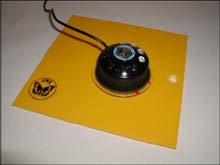
Pros: surface designed for roto-killer mouse
Cons: surface designed for roto-killer mouse
Site: www.rotokiller.com
Litepads Optical comes in different sizes, but even the biggest one is still relatively small.
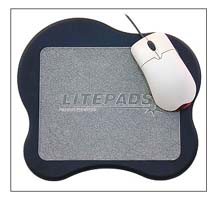
What is interesting with this pad is the new kind of material used for its surface, called the “acrylic ice”. It’s a material with enhanced optical abilities, specially designed for today’s optical mice. You can read the full statement about it on their site so I won’t go too techincal. I really praise innovation and I am giving these guys a plus for it. Unfortunately I do not have any precise sensors that I could use to confirm these results. The surface reminds of a smooth, snowy, plastic window or something like that. Moving the mouse, no matter what feet you have is little odd, and kind of “sticky” - I guess that is a downside of having the material match your optical sensor in the best possible way. That will result in effectively having a high friction pad, although it’s very smooth and made of hard material. The grip of the surface is not solved in the best way and the size of the surface should definitely be enhanced (maybe the acrylic ice is costly at the moment). Overall, this is for you guys who like invention and having the most tech-kie surface at the moment. It looks cool as well, specially when lightened by the optical laser. But small size and the odd surface response to movement are something Litepads engineers should work on.
Pros: innovation, looks
Cons: size, grip, tracking feeling
Site: www.litepads.com
Moving on to the Icemat Black.
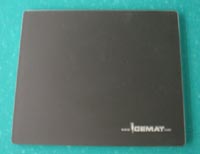
Pros: looks, quality
Cons: size, noise
Site: www.icemat.com
Steelpad 3S/3R is another interesting product.

Made completely of steel (aluminium to be precise) and in elegant black design, this mouse pad will certainly attract attention. It is very thin, and because of its weight it has an excellent grip. The surface is also very smooth and very fast so everything said for icemat applies here as well. The amount of noise it makes is comparable to icemat. The gliding feeling is similar as well, but as it is steel you’ll have to pay even more attention to keep it clean of any dirt. It is slightly bigger then the icemat, but still in the “default” size category. The two versions, 3S and 3R, differ in the design of the surface texture. 3R is rough, somewhat better suited for ball mice who need more friction. 3S has smooth surface that’s more easier and pleasant for gliding. You can get mouse feet from steelpad as well, making the gliding even more enjoyable. There is one very interesting thing about these pads. Since they are made from steel, they stay comfortably cold all the time no matter the room temperature. So when the atmosphere on the LAN heats up and you start to get nervous and sweat your mouse pad will actually be a little helper there, a real friend.
Pros: quality, grip, looks, always stays cold
Cons: size (I am very harsh here), noise
Site: www.steelpad.com
Next surface is the one you mostly already heard of - the Func surface 1030.

It’s been a very popular surface among gamers and not without a reason, it’s loaded with features. It ships in an elegant metal can, practice first started with Razer Boomslang mice. The pad itself is made of fine plastic that is placed into a rubber holder, which provides the grip to the surface. The plastic can be turned both sides with one being the smoother and the other one rougher. You also get a plastic holder for the mouse cord that you can stick to either side of the surface. Surface gliding and tracking are both impressive. It’s fast and does not make as much noise as the icemat or steelpad. The size is normal, being just a little bit bigger then the steelpad. If I had to be picky about this surface I’d go for a grip (not that it will bother you a lot but it can be improved with better rubber holder) and the size. If a version 2030 should be made those are the two things they should pay attention to.
Pros: quality, two surfaces in one, looks, extra attention to details, feeling
Cons: grip, size
Site: www.func.de
Everglide Gaming Mat looks like your ordinary cloth pad. the size, the design.

Only the material is not cloth but a kind of soft, flexible plastic. It has no spectacular features but it is a fast surface with very good tracking, for a very cheap price. Be careful not to bend it too much or drop something on it, cause you could “break” the plastic. You can choose the surface by the printed picture, and there are several different motives. The size of the surface is respectable as well which is an added bonus. It is a solid and economic surface, the one you might consider starting with if you can not afford the pricey ones, or if you want to buy a good gift to your friend that is new to gaming.
Pros: good tracking, cheap, various motives
Cons: cheap, less durable
Site: www.everglide.de
Everglide Giganta is one of the first larger mouse pads that appeared on the market.

The surface is made of hard plastic with a very rough texture. The edge of the surface has a slope of almost 1 cm on every side. It could have been easily avoided to to gain an extra 2 cm both on length and width of the surface, which would it make it much more usable. The surface is also a bit thicker then it should ideally be, with possible problems in discomfort after prolonged use. The kind of plastic used may not suit everyone, for it’s roughness. It is a solid surface that will last long and does not need a lot of maintance.
Pros: grip
Cons: flaws in design, roughness if that bothers you
Site: www.everglide.de
Compad SpeedPad is a surface Giganta should have been like.
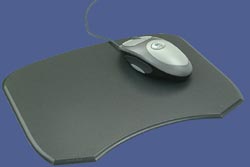
It has the extra size that Giganta misses and it’s a lot thinner. It has an excellent grip. It’s also made of hard plastic but the texture is little smoother then everglide’s, still noticeably rough though. I can not say much more about it, if you like hard plastic surfaces, this should be your choice considering its size and quality.
Pros: size, grip
Cons: nothing if you want a rough surface
Site: www.com-pad.com
Steelpad 4S is the bigger brother of Steelpad 3S.
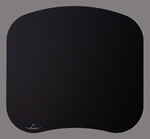
Now this is one surface that deserves attention. Being 29 cm wide it’s the second largest surface that I’ve tried. All the good qualities of the already mentioned Steelpad 3S apply so I won’t repeat them, just add the much-needed extra size. It is really a formidable mouse pad. You can get a mouse cord holder from steelpad as well to complment this surface. It is also made of steel and functions as a weight (its pretty heavy little piece of steel). The two together will probably make you the deadliest opponent on the LAN. It’s a great mouse pad, and it should probably ship in a little bit luxurious package considering its quality and price.
Pros: quality, size, grip, looks, feeling
Cons: noise
Site: www.steelpad.com
GlideTapes BigPad is really a big pad.

It’s the largest one tested (half a centimeter wider then Steelpad). It looks like a standard cloth pad except for a thin layer of plastic on top of it, providing a hard surface. Something like Gaming Mat but with even more softer surface. Being so large, this plastic layer sometimes causes the surface to deform, in the forms of small “hills” on the pad. Nothing drastic though. The surface is very smooth and very fast. It doesn’t even make as much noise as other hard pads. Overall it’s a good pad, except for the mentioned deformation problem - you’ll need to find a case to carry it since it’s so elastic. This should be the definition of the size of a professional mouse pad, I do not think any bigger would provide with much more functionality (although I’d surely like to see bigger pads)
Pros: size, grip, very smooth
Cons: elastic material
Site: www.glidetapes.de
Having 14 mouse pads to test is a very interesting experience. During this whole test, I constantly changed the mouse and the mouse pad, which resulted in constant getting used to factor, and endless changes of the sensitivity in the games. A real nightmare, you can’t imagine. During this period my aim was absolutely terrific one day, and then terrible another one. And I was never sure what is causing that, the mouse, the pad or the sensitivity, until I somehow got used to it. But after six months of testing, I have learned a lot of things on what is important when you judge gaming equipment. My final reviewing criteria is established based upon following elements: tracking quality, size of the mouse pad, tracking “feeling”, price and looks and the overall impression (effort, invention...).
Similar to mice, where you have the wrist and the hand guy, mouse pads also have their differences. The most noticeable one is the “speed” of the surface that can be split to two groups: fast and slow. Fast surfaces are usually made of hard materials, over which the mouse glides without too much resistance or, better said, they have very low friction. In this group we have pads like Func, Icemat, Giganta and so on. The high friction or “slow” pads are usually made of cloth material which gives them a completely different feeling when moving the mouse. These are pads like Allsop and your standard cloth pad. They do not make so much noise when used, and you have the ability to “dig in” the mouse when stopping from a rapid movement, but also you have a higher friction that you have to “fight” with. Generally speaking high friction pads are better for tracking aim (you need friction to track), and low friction pads are better for flick aim (makes the flick dependant only upon your reflex and the mouse).
These are the “fast pads” I’ve tested, sorted by their size (first being the smallest and the last being the largest):
RTR Bullet'n'Board Mousepad
Litepads Optical
Icemat Black
Steelpad 3S/3R
fUnc surface 1030
Everglide Gaming Mat
Everglide Giganta
Compad SpeedPad
Steelpad 4S
GlideTapes BigPad
And similarly, the cloth pads:
Microtracker mouse pad
Standard Cloth pad
Allsop Raindrop
There are some other mouse pads out there on the market, but out of various reasons I was unable to obtain the samples of them for this test. I will mention them nevertheless.
Hard:
Kryptech X-Board - hard, plastic surface in the shape of letter X
Ripper Pad - should have a different feeling, like the skin of a reptile
Ratpadz - similar to Giganta
Everglide Optical - new everglides with improved optical tracking
OCZ Slick Pad - really big, “foamy” like plastic surface
X-trac Pro - designed specially for optical mice
Cloth:
3M Precise/Optical Mouse Surface - one of the first professional mouse surfaces
Logitech Wingman Gaming Surface - Logitech’s own version, hard to find nowadays
Supermat - a HUGE mouse pad. Really, HUGE.
And the upcoming fatal1ty’s “Fatpad”. I really don’t have any more info on it, but I should have it available on test as soon as it’s ready, so stay tuned.
Hard mouse pads
As I already said, these are the pads with low friction surfaces. Anything from hard plastic, steel, glass and other hard surfaces gets in this category. They are generally easier to maintain then the cloth pads. They never bend and are easy to clean - even in the dishwasher. They can even provide you with the edge in the combat (I am not talking about games here), try hitting someone with the steelpad and see what happens (hint, don’t do that).
I have to say that as far tracking goes, all of the surfaces provide with the satisfactory response. The only problem once arose was with the old Logitech opticals and the steelpad - and the fault is on the Logitech side, as their sensor seems not to be fixed on the same distance. With the new MX sensors there are no problems whatsoever. Some pads like the Litepads have even specially designed surface to help optical tracking but as far as gaming is concerned, all the tested surfaces track well.
So the other criteria had to be called upon like the size of the mouse pad and quality. In this category I have ten pads so I am going to start with the smallest one.
RTR Bullet'n'Board Mousepad is the pad you can buy with the Roto-Killer mouse. It’s a very small pad, made of plastic with an odd thingie and that’s a little hole in it. It serves for the purpose of an anchor or a pivot for more control of the mouse (you stick your little finger in it, and use it as an anchor when you move the mouse). It’s effective in combination with the roto-killer mouse (and that’s what it was intended for), but takes some time to get used to it. Other as a supplement for this mouse, you should not think about getting this pad. It’s is simply to small and to compete with the other pads.
Pros: surface designed for roto-killer mouse
Cons: surface designed for roto-killer mouse
Site: www.rotokiller.com
Litepads Optical comes in different sizes, but even the biggest one is still relatively small.
What is interesting with this pad is the new kind of material used for its surface, called the “acrylic ice”. It’s a material with enhanced optical abilities, specially designed for today’s optical mice. You can read the full statement about it on their site so I won’t go too techincal. I really praise innovation and I am giving these guys a plus for it. Unfortunately I do not have any precise sensors that I could use to confirm these results. The surface reminds of a smooth, snowy, plastic window or something like that. Moving the mouse, no matter what feet you have is little odd, and kind of “sticky” - I guess that is a downside of having the material match your optical sensor in the best possible way. That will result in effectively having a high friction pad, although it’s very smooth and made of hard material. The grip of the surface is not solved in the best way and the size of the surface should definitely be enhanced (maybe the acrylic ice is costly at the moment). Overall, this is for you guys who like invention and having the most tech-kie surface at the moment. It looks cool as well, specially when lightened by the optical laser. But small size and the odd surface response to movement are something Litepads engineers should work on.
Pros: innovation, looks
Cons: size, grip, tracking feeling
Site: www.litepads.com
Moving on to the Icemat Black.
Pros: looks, quality
Cons: size, noise
Site: www.icemat.com
Steelpad 3S/3R is another interesting product.
Made completely of steel (aluminium to be precise) and in elegant black design, this mouse pad will certainly attract attention. It is very thin, and because of its weight it has an excellent grip. The surface is also very smooth and very fast so everything said for icemat applies here as well. The amount of noise it makes is comparable to icemat. The gliding feeling is similar as well, but as it is steel you’ll have to pay even more attention to keep it clean of any dirt. It is slightly bigger then the icemat, but still in the “default” size category. The two versions, 3S and 3R, differ in the design of the surface texture. 3R is rough, somewhat better suited for ball mice who need more friction. 3S has smooth surface that’s more easier and pleasant for gliding. You can get mouse feet from steelpad as well, making the gliding even more enjoyable. There is one very interesting thing about these pads. Since they are made from steel, they stay comfortably cold all the time no matter the room temperature. So when the atmosphere on the LAN heats up and you start to get nervous and sweat your mouse pad will actually be a little helper there, a real friend.
Pros: quality, grip, looks, always stays cold
Cons: size (I am very harsh here), noise
Site: www.steelpad.com
Next surface is the one you mostly already heard of - the Func surface 1030.
It’s been a very popular surface among gamers and not without a reason, it’s loaded with features. It ships in an elegant metal can, practice first started with Razer Boomslang mice. The pad itself is made of fine plastic that is placed into a rubber holder, which provides the grip to the surface. The plastic can be turned both sides with one being the smoother and the other one rougher. You also get a plastic holder for the mouse cord that you can stick to either side of the surface. Surface gliding and tracking are both impressive. It’s fast and does not make as much noise as the icemat or steelpad. The size is normal, being just a little bit bigger then the steelpad. If I had to be picky about this surface I’d go for a grip (not that it will bother you a lot but it can be improved with better rubber holder) and the size. If a version 2030 should be made those are the two things they should pay attention to.
Pros: quality, two surfaces in one, looks, extra attention to details, feeling
Cons: grip, size
Site: www.func.de
Everglide Gaming Mat looks like your ordinary cloth pad. the size, the design.
Only the material is not cloth but a kind of soft, flexible plastic. It has no spectacular features but it is a fast surface with very good tracking, for a very cheap price. Be careful not to bend it too much or drop something on it, cause you could “break” the plastic. You can choose the surface by the printed picture, and there are several different motives. The size of the surface is respectable as well which is an added bonus. It is a solid and economic surface, the one you might consider starting with if you can not afford the pricey ones, or if you want to buy a good gift to your friend that is new to gaming.
Pros: good tracking, cheap, various motives
Cons: cheap, less durable
Site: www.everglide.de
Everglide Giganta is one of the first larger mouse pads that appeared on the market.
The surface is made of hard plastic with a very rough texture. The edge of the surface has a slope of almost 1 cm on every side. It could have been easily avoided to to gain an extra 2 cm both on length and width of the surface, which would it make it much more usable. The surface is also a bit thicker then it should ideally be, with possible problems in discomfort after prolonged use. The kind of plastic used may not suit everyone, for it’s roughness. It is a solid surface that will last long and does not need a lot of maintance.
Pros: grip
Cons: flaws in design, roughness if that bothers you
Site: www.everglide.de
Compad SpeedPad is a surface Giganta should have been like.
It has the extra size that Giganta misses and it’s a lot thinner. It has an excellent grip. It’s also made of hard plastic but the texture is little smoother then everglide’s, still noticeably rough though. I can not say much more about it, if you like hard plastic surfaces, this should be your choice considering its size and quality.
Pros: size, grip
Cons: nothing if you want a rough surface
Site: www.com-pad.com
Steelpad 4S is the bigger brother of Steelpad 3S.
Now this is one surface that deserves attention. Being 29 cm wide it’s the second largest surface that I’ve tried. All the good qualities of the already mentioned Steelpad 3S apply so I won’t repeat them, just add the much-needed extra size. It is really a formidable mouse pad. You can get a mouse cord holder from steelpad as well to complment this surface. It is also made of steel and functions as a weight (its pretty heavy little piece of steel). The two together will probably make you the deadliest opponent on the LAN. It’s a great mouse pad, and it should probably ship in a little bit luxurious package considering its quality and price.
Pros: quality, size, grip, looks, feeling
Cons: noise
Site: www.steelpad.com
GlideTapes BigPad is really a big pad.
It’s the largest one tested (half a centimeter wider then Steelpad). It looks like a standard cloth pad except for a thin layer of plastic on top of it, providing a hard surface. Something like Gaming Mat but with even more softer surface. Being so large, this plastic layer sometimes causes the surface to deform, in the forms of small “hills” on the pad. Nothing drastic though. The surface is very smooth and very fast. It doesn’t even make as much noise as other hard pads. Overall it’s a good pad, except for the mentioned deformation problem - you’ll need to find a case to carry it since it’s so elastic. This should be the definition of the size of a professional mouse pad, I do not think any bigger would provide with much more functionality (although I’d surely like to see bigger pads)
Pros: size, grip, very smooth
Cons: elastic material
Site: www.glidetapes.de